You don’t need fluent Dutch to start working in the Netherlands. In many sectors, English is enough—especially for practical,
entry-level roles where motivation, reliability and basic communication matter most.
Can you work in the Netherlands without speaking Dutch?
Yes, in many cases you can. The Netherlands has a large international workforce, and plenty of employers are used to working
with people who speak English (or another EU language) instead of Dutch.
Most Dutch companies still appreciate it if you learn a few basic Dutch words over time, but for many roles you can start in
English and improve your Dutch while you work.
Where are the best jobs if you don’t speak Dutch?
If you don’t speak Dutch yet, it helps to focus on sectors where the work is practical and processes are clear. These are
often jobs with training on the job and structured routines, which makes it easier to start in an international team.
Logistics and warehouses
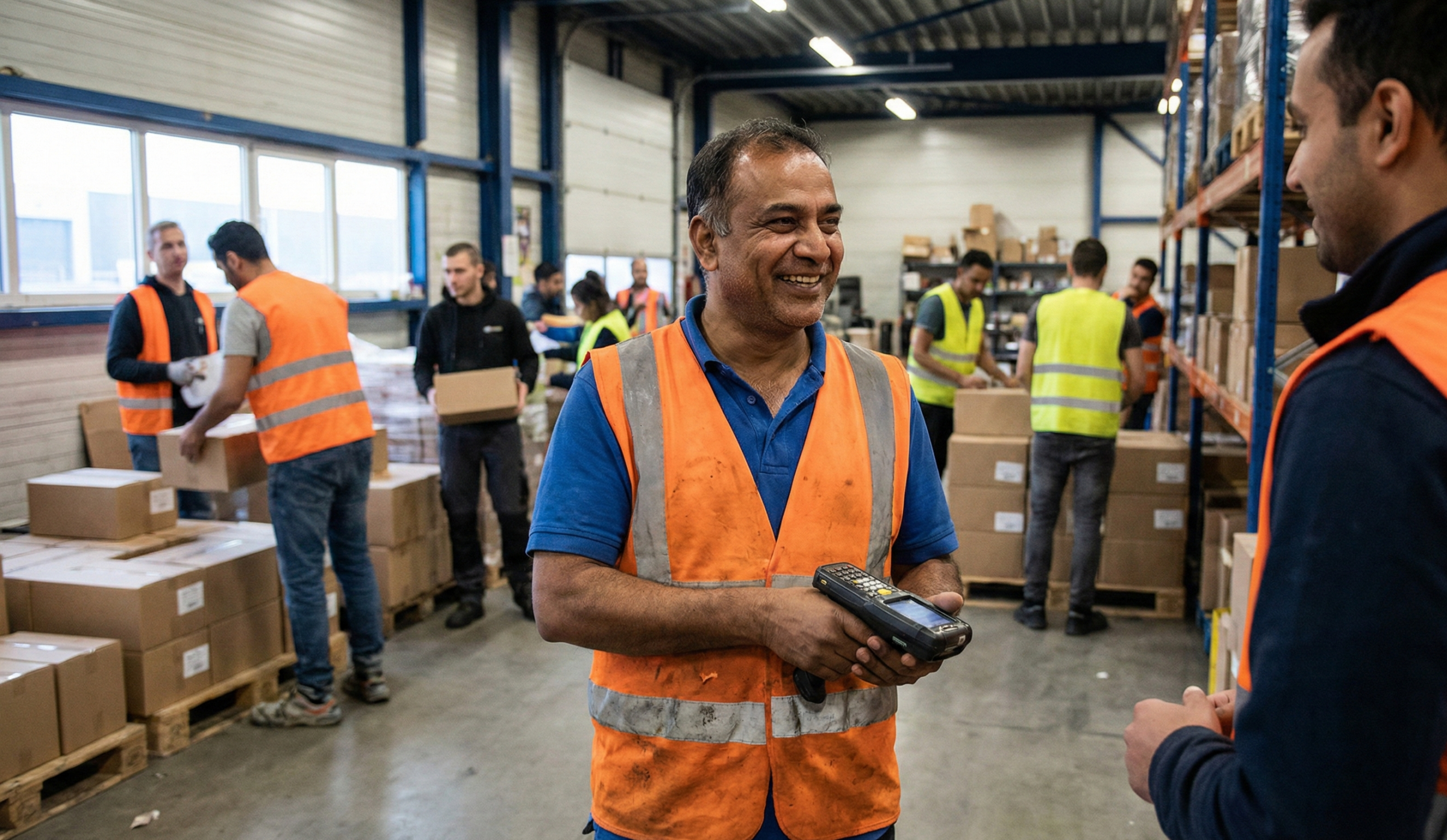
Warehouses and logistics hubs often have mixed international teams. Instructions are frequently available in English, and
many tasks are process-driven, such as scanning, picking, packing and loading.
Production and manufacturing
Production jobs in food, packaging and manufacturing often use clear work instructions and safety rules. You learn a lot on
the job, and you can grow into roles like operator or line leader if you perform well.
Agriculture and seasonal work
In agriculture, such as greenhouse work, harvesting and sorting, teams are often international. The work is practical and
employers are used to working with foreign workers who start with English.
Cleaning and facility services
Cleaning roles can be a good entry point if you want stable hours and clear tasks. Communication is usually simple and
focused on planning and quality standards.
What employers expect when you don’t speak Dutch
Not speaking Dutch is usually not the biggest issue. Employers mainly look for people who are dependable and willing to work.
There is often an expectation that you:
- show up on time and follow agreements
- work safely and respect procedures
- communicate clearly in basic English
- are open to feedback and teamwork
If you can do these basics well, you can build trust quickly. That trust often leads to longer contracts and growth opportunities.
Do you need an EU passport?
For many practical jobs, the key requirement is that you can legally work in the Netherlands. In most cases, this means you
need a valid EU passport.
If you are a non-EU candidate and need visa sponsorship, your options depend on the employer and whether they are a recognized
sponsor. Not every staffing agency can provide sponsorship for high-skilled migrants.
How to increase your chances (even without Dutch)
Small improvements can make a big difference. These steps help you stand out in the Dutch job market:
- Prepare a clear CV in English with your work history and availability.
- Be specific about the type of job you want.
- Show flexibility regarding shifts and location.
- Learn basic Dutch words related to safety and daily communication.
- Make sure your documents are ready, such as your EU ID or passport.
Can you get accommodation with the job?
Many people look for jobs with housing. Depending on the employer and the vacancy, accommodation can sometimes be arranged.
In some cases, transport to work and help with local administration may also be available.
Always check the conditions carefully. Make sure you understand the costs, distance to work and house rules before you agree.
Conclusion: you can start before you speak Dutch
If your main question is: “Don’t speak Dutch but want a job in the Netherlands?” — the answer is yes.
Focus on sectors where English is common, prove that you are reliable and use your first months to learn basic Dutch.
That combination gives you the best chance to build a stable future in the Netherlands.